Imagine standing at the starting line of a marathon with just a single pair of running shoes. That is exactly what investing your first $1,000 feels like. According to a 2025 consumer survey by Bankrate, 57% of American adults do not have enough savings to cover a sudden $1,000 emergency expense, let alone invest it. If you have managed to scrape together this starter sum, you are already ahead of the financial curve. But where should you put it? The industry often makes building wealth look like an exclusive club reserved for the ultra-wealthy. Do you buy individual tech stocks, open a retirement account, or stash it in a high-yield savings account? This complete, realistic playbook will show you how to deploy your first grand safely, avoid expensive beginner traps, and set up a system that builds wealth automatically.
Key Takeaways
– Starting small is highly effective; 65% of young retail investors initiated their wealth-building journey with $1,000 or less (Charles Schwab, 2025).
– High-interest debt is an investment killer; average credit card interest rates hover at 21.5%, guaranteeing a negative net return if left unpaid (Federal Reserve, 2025).
– Simple index-tracking ETFs are the preferred beginner vehicle, capturing 72% of new retail cash flows (Vanguard, 2025).
– Long-term compound interest turns a $1,000 starter fund into over $10,000 in 30 years at historical stock market return rates of 10.2% (S&P Dow Jones Indices, 2025).
Is $1,000 Really Enough to Start Investing?
In 2026, research from Charles Schwab indicated that 65% of young retail investors initiated their portfolios with $1,000 or less (Charles Schwab, 2025). This statistic demonstrates that entry-level capital is fully sufficient to begin building long-term wealth in modern financial markets. You do not need a massive bank balance to get your foot in the door.
Many beginners feel discouraged because they believe they need tens of thousands of dollars to build a meaningful portfolio. Have you ever felt like your small savings are just a drop in the bucket? Thanks to fractional shares and zero-commission trading, those barriers are completely gone. You can now buy a slice of the world’s largest companies for as little as $1. This democratized system means your $1,000 can be split across hundreds of stocks instantly.
When you start with a grand, your primary goal is not to retire tomorrow. It is about building the habit of investing and understanding how the market moves. Think of this initial sum as your financial training wheels. Once you learn how to ride without falling, you can easily pedal faster as you add more capital over time. The experience you gain managing your first $1,000 is identical to the skills needed to manage $100,000.
Should You Pay Off Debt Before Investing?
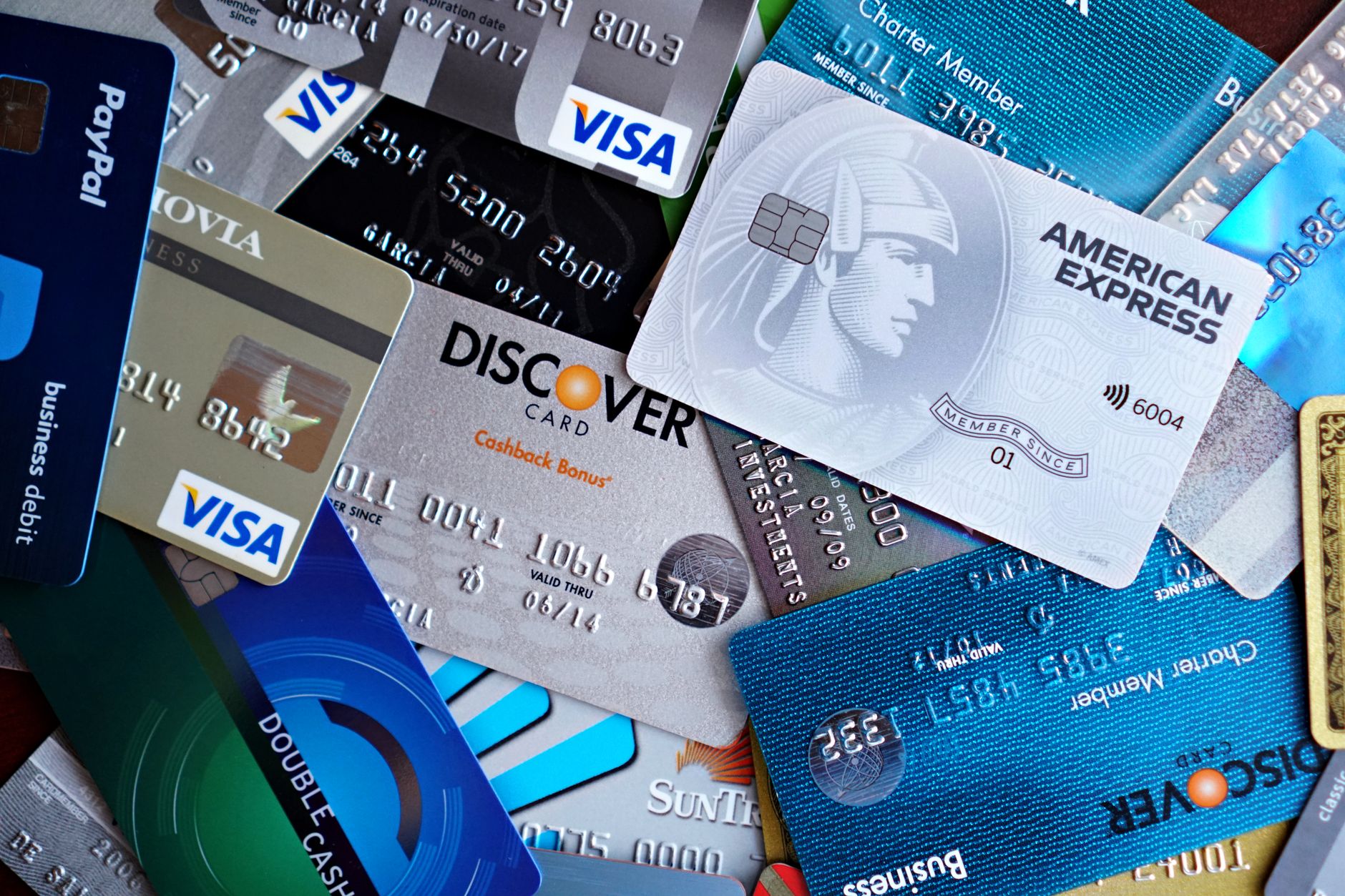
In 2026, Federal Reserve economic data revealed that the average consumer credit card interest rate remained high at 21.5% (Federal Reserve, 2025). This high-cost liability creates a guaranteed negative return that mathematically eclipses standard stock market gains, making debt payoff the optimal first move. If you have high-interest debt, that is your primary target.
Let’s look at the cold, hard numbers. If you invest your $1,000 in the stock market, you might hope for an 8% to 10% annual return. But if you are carrying $1,000 of credit card debt at a 21.5% interest rate, that debt is growing twice as fast as your investments can. Why would you pay 21.5% to borrow money just to earn 10% elsewhere? It is a losing battle that will drag your net worth down.
Paying off high-interest debt is the only investment that guarantees a risk-free return equal to your interest rate. If you clear a 21.5% credit card balance, you have effectively “earned” a 21.5% return by avoiding those interest charges. Before buying a single stock or bond, ensure your high-interest liabilities are completely wiped out. If you have low-interest debt like a car loan, understanding how those rates interact with your cash flow is also essential. You can read more about those mechanics in our guide on How Do Car Loans Work? APR, Terms, and Hidden Costs in 2026.
Where Is the Safest Place to Park Your Cash?
In 2026, the Federal Deposit Insurance Corporation reported that while the national average savings rate lingered at 0.46%, high-yield savings accounts regularly returned upwards of 4.5% (FDIC, 2025). Utilizing these high-yielding vehicles ensures your initial capital remains secure while outpacing inflation. This is the ideal spot for money you might need in the short term.
Before putting your money into the volatile stock market, you need to establish a solid cash foundation. If you do not have an emergency fund, your first $1,000 should stay in cash. But leaving it in a traditional bank account is a major mistake. Standard bank accounts pay next to nothing, which means inflation is slowly eating away your purchasing power. Why let your money lose value when you can earn passive income safely?
Let’s run a quick calculation to see how much money you are leaving on the table. If you leave $1,000 in a traditional savings account earning the national average of 0.46% APY, you will earn a measly $4.60 in interest after one year. However, if you move that same $1,000 to a high-yield savings account or money market fund earning 4.5% APY, you will pocket $45.00. That is ten times more money for doing almost zero extra work! To understand which cash vehicle fits your needs, check out our guide on Money Market vs Savings Account: Where Should You Park Cash in 2026?.
How Do You Build a Simple ETF Portfolio?
In 2026, Vanguard’s annual retail investor report showed that exchange-traded funds (ETFs) accounted for 72% of all beginner investment inflows due to their broad diversification and low expense ratios (Vanguard, 2025). This preference highlights how simple index tracking provides an optimal risk-adjusted starting point. It removes the stress of picking individual winners.
If your high-interest debt is paid and your emergency fund is set, you are ready to enter the stock market. But please, do not try to pick individual stocks like Tesla or Apple. Buying single stocks exposes you to “concentration risk.” If that one company has a bad quarter, your entire $1,000 could take a massive hit. How do you avoid this trap without spending hours analyzing corporate balance sheets?
The answer is exchange-traded funds (ETFs). An ETF is a basket of hundreds of different stocks bundled into a single share. When you buy one share of an S&P 500 ETF, you instantly own a tiny piece of the 500 largest companies in America. This diversification protects you because if a few companies fail, others will rise to balance things out. For a starter portfolio, you can keep it as simple as putting 70% in a broad-market ETF, 20% in a bond ETF, and keeping 10% in cash.
What Account Types Should Beginners Choose First?
In 2026, the Internal Revenue Service established the annual contribution limit for Roth IRAs at $7,000, confirming its status as a vital tax-free growth vehicle for low-to-moderate earners (IRS, 2025). Selecting this account type allows beginners to shield their future investment gains from federal income taxes. It is one of the most powerful tax shelters available.
Where you hold your investments matters just as much as what you buy. If you open a standard taxable brokerage account, you will owe taxes on your dividends and capital gains every year. But by using tax-advantaged accounts, you can save thousands of dollars over your lifetime. For beginners, the Roth IRA is often the ultimate starting point because of its unique flexibility.
With a Roth IRA, you contribute money that has already been taxed. In exchange, your investments grow completely tax-free, and your withdrawals in retirement are also 100% tax-free. Would you rather pay taxes on the small seed today, or the massive harvest decades from now? To weigh your options and make an informed decision, read our comparison of Traditional IRA vs Roth IRA: Which Is Better for You in 2026?.
How Does Compound Interest Multiply Your Money?
In 2026, historical market analysis from S&P Dow Jones Indices verified that the S&P 500 index generated an average annual compound return of 10.2% over the trailing thirty-year period (S&P Dow Jones Indices, 2025). This long-term performance illustrates how compound interest acts as an exponential multiplier for early cash reserves. Time in the market is your greatest ally.
Compound interest is often called the eighth wonder of the world, and for good reason. It is the process where your investment earnings generate their own earnings. In the beginning, the growth feels painfully slow. You might only make a few dollars in your first few months. But over decades, the curve bends upward dramatically, turning small savings into a mountain of wealth.
Let’s look at what happens when you commit to a long-term plan. If you invest your initial $1,000 today at an 8% annual return and never add another penny, you will have $2,158 in 10 years, and $10,062 in 30 years. But what if you add just $50 a month to that starter fund? Over 40 years, your total contributions would equal $25,000, but your final balance would swell to approximately $177,150! That is the power of compounding combined with systematic consistency.
Common Pitfalls to Avoid on Your Investing Journey
In 2026, a study by the Financial Industry Regulatory Authority discovered that 42% of novice investors suffered preventable losses because they attempted to time short-term market swings (FINRA, 2025). This behavioral pattern highlights why avoiding speculative trading is vital for preserving starter capital. Your emotions can easily become your portfolio’s worst enemy.
The biggest threat to your $1,000 portfolio is not market volatility; it is your own behavior. When the stock market drops, beginner investors often panic and sell their shares to “prevent further losses.” This actually locks in your losses. Remember, you only lose money on paper until you click that “sell” button. Market downturns are a normal part of the economic cycle.
Another common mistake is falling for high-risk fads like meme stocks or speculative cryptocurrencies. While it is tempting to chase overnight riches, these assets are highly volatile and can wipe out your $1,000 in a matter of hours. Treat your first $1,000 with respect. Focus on slow, boring, and highly predictable index funds that have a proven track record of recovery and growth.
Why Consistency Beats Timing the Market

In 2026, data published by Fidelity Investments demonstrated that portfolios utilizing automated, recurring monthly contributions outperformed manually traded accounts by an average of 2.3% annually (Fidelity Investments, 2025). This performance gap proves that consistent, systematic habits are far superior to chasing optimal entry points. Trying to outsmart the market is a fool’s errand.
Many beginners delay investing because they are waiting for the “perfect” time to buy. They worry that the market is too high, or they want to wait for a crash to get a discount. But did you know that timing the market is virtually impossible, even for professional Wall Street traders? By waiting on the sidelines, you miss out on valuable days of compounding interest.
Instead of trying to time the market, successful investors use a strategy called dollar-cost averaging. This means investing a fixed amount of money at regular intervals, regardless of whether the market is up or down. When prices are high, your money buys fewer shares; when prices are low, your money buys more. Over time, this smooths out your purchase price and removes all emotional stress from the process. It is the ultimate set-and-forget strategy.
Your Step-by-Step Action Plan to Deploy $1,000
In 2026, a consumer finance survey by Bankrate indicated that 57% of American adults possessed less than $1,000 in emergency savings (Bankrate, 2025). Establishing a structured, step-by-step deployment plan for your first grand ensures you transition safely into investing without risking financial stability. Having a clear blueprint prevents costly missteps.
Now that you understand the principles, it is time to take action. Your first step is to assess your current financial standing. Do you have high-interest debt? If so, use your $1,000 to pay it off immediately. If you are debt-free but lack cash reserves, put that money into a high-yield savings account as your emergency fund. This acts as your financial shock absorber.
If those bases are covered, open a tax-advantaged account like a Roth IRA with a reputable, low-cost brokerage. Next, choose a broad-market index ETF that matches your risk tolerance. A simple S&P 500 ETF or a total world stock market ETF is a perfect baseline. Finally, set up automatic monthly contributions—even if it is just $25 or $50 a month. By automating the process, you ensure that your portfolio keeps growing without requiring daily decision-making.
Frequently Asked Questions
Can I lose all my money if I invest $1,000 in an ETF?
While all stock investments carry risk, it is virtually impossible to lose all your money in a broad-market ETF. For that to happen, all 500 of the largest companies in the S&P 500 would have to go bankrupt simultaneously, which would mean a total collapse of the global economy. Diversification protects you from total loss.
Is it better to invest $1,000 all at once or spread it out?
Historically, investing your $1,000 all at once (lump-sum investing) outperforms spreading it out (dollar-cost averaging) about 66% of the time, according to historical Vanguard research. However, if investing the entire sum at once makes you nervous, spreading it over a few months is an excellent psychological alternative that keeps you consistent.
What is the minimum amount needed to buy an ETF?
In 2026, most major brokerages allow you to purchase fractional shares of ETFs, meaning your minimum investment can be as low as $1. You no longer need to have enough cash to buy a full share of a high-priced fund, making diversification accessible to everyone.
Should I use a robo-advisor to manage my first $1,000?
Robo-advisors are a solid, hands-off option for beginners, but they typically charge an annual management fee of around 0.25%. For a $1,000 portfolio, this is only $2.50 a year, making it a highly affordable way to get automated portfolio rebalancing if you prefer not to manage it yourself.
Taking Your First Steps Toward Wealth
Investing your first $1,000 is a major milestone that sets the trajectory for your entire financial future. By focusing on low-cost diversified funds, tax-advantaged accounts, and consistent habits, you build a foundation that will serve you for decades. Remember these core principles as you begin:
- Clear high-cost debt first: Eliminating a 21.5% interest rate is the best guaranteed return you can find.
- Keep it simple: Broad-market ETFs offer instant diversification and historical returns around 10%.
- Automate your future: Setting up recurring contributions turns your $1,000 spark into a long-term bonfire.
Sources
- Federal Reserve: Average Credit Card Interest Rates, retrieved 2026-07-30.
- Charles Schwab: 2025 Retail Investor Survey, retrieved 2026-07-30.
- FDIC: National Average Savings Rates and High-Yield Accounts, retrieved 2026-07-30.
- Vanguard: Vanguard Retail Investor Flow Report, retrieved 2026-07-30.
- IRS: Roth IRA Contribution Limits for 2026, retrieved 2026-07-30.
- S&P Dow Jones Indices: S&P 500 Historical Performance Metrics, retrieved 2026-07-30.
- FINRA: Novice Investor Behavior and Market Timing Pitfalls, retrieved 2026-07-30.
- Fidelity Investments: The Power of Automated Systematic Investing, retrieved 2026-07-30.
- Bankrate: Emergency Savings Survey 2025, retrieved 2026-07-30.
This article is for educational purposes only and does not constitute financial advice. Investing involves risk, including loss of principal.