In 2023, 54% of U.S. adults held retirement savings yet only 15% owned a health savings account, according to the Federal Reserve’s Survey of Household Economics and Decisionmaking. That gap reveals a common mistake: people chase investment returns before securing the accounts that protect them from financial shocks. The order you open accounts determines whether a car repair becomes a crisis or a minor withdrawal. This guide walks through the exact priority sequence — emergency buffer, employer match, tax-advantaged health savings, then growth accounts — so every dollar lands in the right bucket from day one.
Key Takeaways
– 63% of adults could cover a $400 emergency with cash or equivalent in 2023, leaving 37% vulnerable to high-interest debt (Federal Reserve, 2023).
– The national average savings APY rose from 0.06% in 2021 to 0.45% in 2024, but high-yield accounts still pay 10x more (FDIC, 2024).
– 2024 contribution limits: $23,000 for 401(k), $7,000 for IRA, $4,150 for individual HSA (IRS, 2024).
– Only 25% of households hold taxable brokerage accounts, yet they’re essential for pre-retirement goals (Federal Reserve, 2023).
Why Account Order Matters More Than You Think
Opening accounts in the wrong sequence forces you to tap investments for emergencies, triggering taxes, penalties, and market-timing risk. In 2023, 37% of adults couldn’t cover a $400 emergency without borrowing, per the Federal Reserve. A proper stack — checking, high-yield savings, employer 401(k) match, HSA, IRA, then taxable brokerage — ensures each dollar serves its highest purpose. Skip a layer and the whole structure wobbles when life hits.
Think of it like building a house: you don’t frame the roof before pouring the foundation. Your checking account handles daily flow. High-yield savings absorbs shocks. Tax-advantaged accounts compound wealth efficiently. Taxable accounts fund mid-term dreams. Reordering saves thousands in fees and lost growth over a decade. Why do so many beginners open a Robinhood account before a high-yield savings account?
Fidelity recommends saving 1x salary by 30, 3x by 40, 6x by 50, and 8x by 60. Those milestones assume you’ve already mastered the account hierarchy. If you’re investing in a taxable brokerage while carrying credit-card debt at 24% APR, you’re effectively guaranteeing a negative return. The math doesn’t lie — but the sequence does the heavy lifting.
What Is the Very First Account Every Adult Needs?

A no-fee checking account with free ATM access is the non-negotiable starting point. In 2023, 95% of U.S. households had a checking account (Federal Reserve, 2023), but many pay $15 monthly maintenance fees that total $180 annually — money that could seed an emergency fund. Look for no minimum balance, no overdraft fees, and a wide ATM network. Online banks and credit unions often beat big banks on all three.
Set up direct deposit and automate bill pay so the account runs itself. Keep one month’s expenses plus a $100 buffer here — no more. Everything above that threshold should flow instantly to a high-yield savings account earning 4%+ APY. The checking account is a transit hub, not a storage locker. Do you know your current account’s fee schedule by heart?
If you’re unbanked, the FDIC’s BankFind tool locates insured institutions nearby. Second-chance checking accounts exist for those with ChexSystems records. The goal: a frictionless pipeline that moves money toward wealth-building accounts without manual intervention. Once this pipe is solid, you never think about it again.
How Much Should Your Emergency Fund Hold Before Investing?
Target three to six months of essential expenses in a high-yield savings account before directing a single dollar to investments. In 2024, the national average savings APY sat at 0.45% (FDIC, 2024), yet top online accounts offered 4.5%–5.3% — a 10x gap that compounds to hundreds annually on a $10,000 balance. That spread is free money for simply choosing the right institution.
If you save $300 monthly at 4.5% APY for 18 months, you’ll accumulate roughly $5,620 — enough to cover a typical $4,000 emergency with room to spare. At the national average 0.45% APY, the same habit yields only $5,460. The $160 difference is pure account selection.
Start with a $1,000 mini-fund if you have high-interest debt, then attack debt while building toward the full target. Automate transfers on payday so the fund grows invisibly. Only after the emergency fund is complete should you increase 401(k) contributions beyond the match or open an IRA. Why gamble rent money on the S&P 500 when a 5% guaranteed return sits one click away?
Which Retirement Account Deserves Your First Dollar?
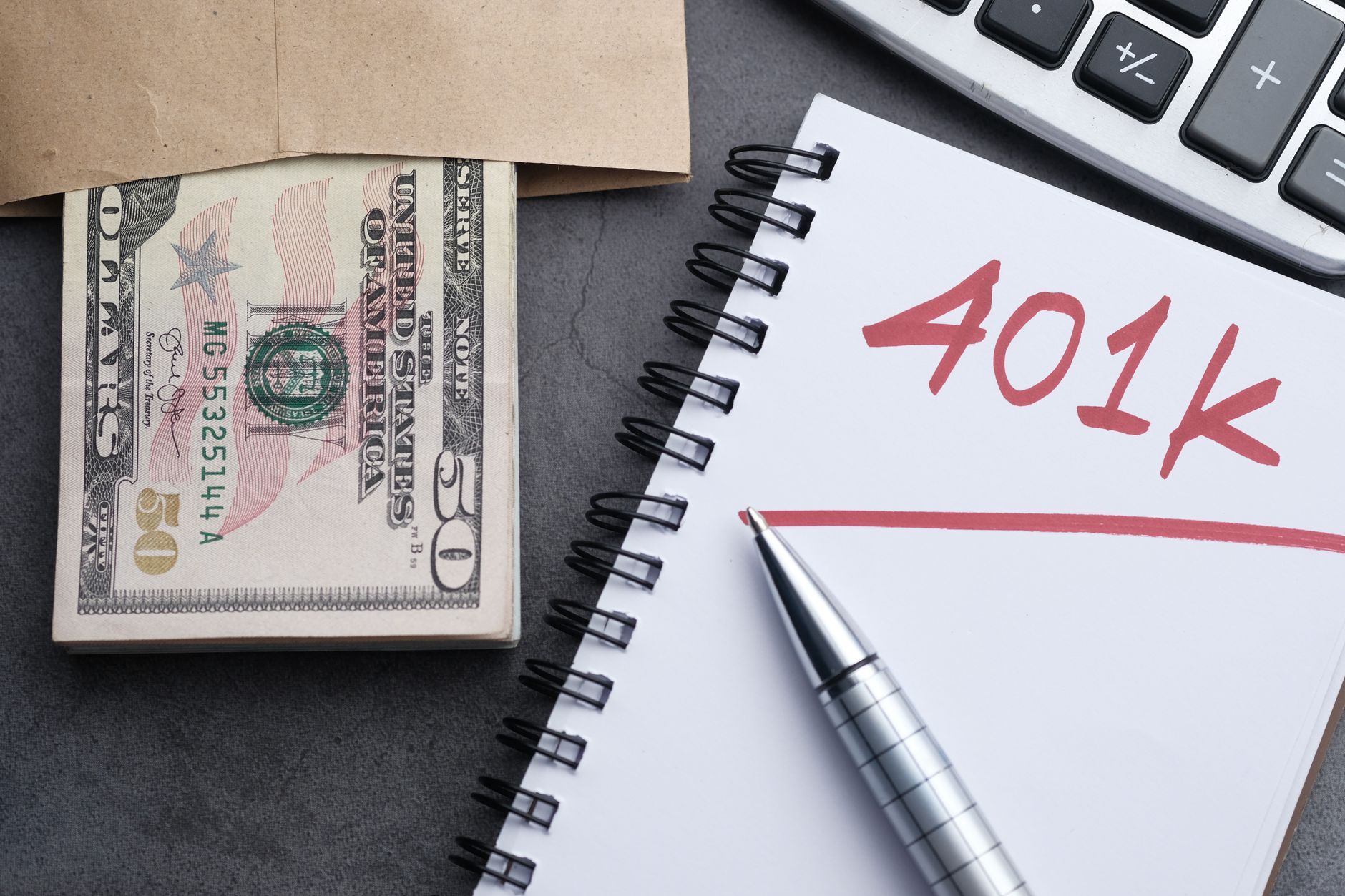
Capture your full employer 401(k) match before funding any other retirement account. It’s an instant 100% return on the matched portion — no market beats that. In 2024, the 401(k) contribution limit is $23,000 (IRS, 2024), but you only need to contribute enough to get every matching dollar. Typical matches range from 3% to 6% of salary; on a $60,000 income, that’s $1,800–$3,600 free annually.
After the match, direct additional dollars to a Roth IRA if you’re eligible (phase-outs start at $146,000 single / $230,000 married in 2024). The 2024 IRA limit is $7,000 (IRS, 2024). Roth contributions grow tax-free and withdrawals are tax-free in retirement — a powerful hedge against future rate hikes. If income exceeds Roth limits, a traditional IRA or backdoor Roth keeps the pipeline open.
Vanguard data shows investors who max their match and IRA consistently outperform those who chase hot funds in taxable accounts. The match is guaranteed; the market isn’t. Have you calculated exactly what percentage of your paycheck triggers the full match?
When Does an HSA Beat a Traditional IRA?
If you have a high-deductible health plan (HDHP), the HSA is the only triple-tax-advantaged account in existence: contributions reduce taxable income, growth is tax-free, and qualified medical withdrawals are tax-free. In 2024, limits are $4,150 individual / $8,300 family (IRS, 2024). After age 65, non-medical withdrawals face only income tax — effectively a traditional IRA with a healthcare bonus.
A 30-year-old contributing $4,150 annually to an HSA invested at 7% average return would accumulate roughly $618,000 by 65. If used for qualified expenses, every dollar exits tax-free. The same $4,150 in a traditional IRA would yield about $618,000 pre-tax, but ordinary income tax on withdrawal could削减 22%–37% depending on bracket.
Prioritize the HSA after your 401(k) match but before maxing an IRA if your HDHP qualifies. Invest the HSA balance rather than spending it — treat it as a stealth retirement account. Only 15% of households own an HSA (Federal Reserve, 2023), meaning most eligible people leave this arbitrage on the table. Are you one of them?
Should You Open a Taxable Brokerage Account Next?
Yes — once emergency fund, 401(k) match, HSA, and IRA are funded, a taxable brokerage becomes your flexible wealth engine. In 2023, only 25% of households held taxable investment accounts (Federal Reserve, 2023), yet they’re essential for goals like a home down payment, business startup, or early retirement bridge. No contribution limits, no income caps, no withdrawal penalties.
Investing $500 monthly in a broad-market ETF at 8% average return for 10 years grows to roughly $91,500. In a taxable account, you’ll owe long-term capital gains tax (0%, 15%, or 20%) only on the ~$31,500 gain when you sell. In a Roth IRA, that gain is tax-free — but you can’t touch it penalty-free until 59½ without specific exceptions.
Choose a broker with zero commissions, fractional shares, and automatic rebalancing. Fidelity, Vanguard, Schwab, and M1 Finance all qualify. Set monthly auto-invest into a three-fund portfolio (U.S. total market, international, bonds) matching your risk tolerance. This account funds life’s middle chapter — the decade between career establishment and traditional retirement. What mid-term goal would you fund if this account existed today?
How Do High-Yield Savings and Money Market Accounts Compare?

Both offer FDIC insurance and competitive yields, but high-yield savings accounts typically pay slightly higher APYs with no check writing, while money market accounts include limited checks and debit access. In 2024, top high-yield savings APYs reached 5.3% versus 5.0% for money markets (Bankrate, 2024). For pure emergency savings, the higher yield wins. For an account you’ll tap monthly, money market convenience may justify the spread.
Federal Reserve Regulation D historically limited savings withdrawals to six monthly; though suspended in 2020, some banks still enforce it. Money market accounts often allow three checks monthly. If you need frequent access, a money market account at a credit union like Alliant or Navy Federal blends yield and liquidity. For set-and-forget emergency funds, chase the highest APY regardless of account type.
Compare current rates at Bankrate or NerdWallet before opening — the spread shifts monthly. A 0.25% difference on $20,000 is $50 annually; not life-changing, but free money for five minutes of research. Have you checked your current savings APY against this week’s leaders?
Frequently Asked Questions
What if I can’t afford to fund all these accounts at once?
Fund them sequentially: checking buffer → $1,000 mini emergency fund → 401(k) match → full emergency fund → HSA → IRA → taxable brokerage. Each step completes before the next begins. Progress, not perfection, builds wealth.
Can I use a Roth IRA as my emergency fund?
You can withdraw Roth contributions (not earnings) anytime tax- and penalty-free. However, tapping retirement space for emergencies sacrifices irreplaceable tax-advantaged compounding. Keep emergencies in savings; let the Roth compound.
What’s the difference between a traditional and Roth 401(k)?
Traditional contributions reduce taxable income now; withdrawals are taxed later. Roth contributions are post-tax; qualified withdrawals are tax-free. Choose Roth if you expect higher retirement tax rates; traditional if lower. Many plans offer both — split contributions to diversify tax risk.
Do I need a separate account for each savings goal?
Not necessarily. Many high-yield savings accounts offer “buckets” or sub-accounts for goals like vacation, car, and taxes. One account with labeled buckets simplifies tracking while keeping funds FDIC-insured up to $250,000 per ownership category.
When should I hire a financial advisor instead of DIY?
Consider a fee-only fiduciary advisor when your finances grow complex: multiple income streams, equity compensation, estate planning needs, or behavioral coaching value. For straightforward account stacking and index-fund investing, DIY with automation costs near zero.
Your Account-Opening Action Plan
- Open a no-fee checking account and a 4.5%+ APY high-yield savings account this week; automate $300/month to savings until you hit 3–6 months of expenses.
- Enroll in your 401(k) at the exact match percentage; then open a Roth IRA at Vanguard, Fidelity, or Schwab and set a $583/month auto-contribution to max the $7,000 limit.
- If eligible, open an HSA at a provider like Fidelity or Lively; invest the balance in a low-cost total-market fund and pay medical costs out of pocket to let the HSA compound.
Sources
- Federal Reserve. Economic Well-Being of U.S. Households in 2023, retrieved 2026-10-21.
- FDIC. National Rates and Rate Caps, retrieved 2026-10-21.
- Internal Revenue Service. Retirement Topics – 401(k) and Profit-Sharing Plan Contribution Limits, retrieved 2026-10-21.
- Bankrate. Best High-Yield Savings Account Rates, retrieved 2026-10-21.
This article is for educational purposes only and does not constitute financial advice. Investing involves risk, including loss of principal.
Pingback: How Do You Build a Financial Foundation From Scratch? - WealthForge