Struggling with a low credit score but need cash fast? Discover how lenders evaluate bad‑credit applicants and what you can do to improve your odds.
Key Takeaways
– In 2025, 30% of applicants with scores under 600 were approved for a personal loan (MyFICO, 2025).
– Payment history makes up 35% of your FICO score, the largest single factor (MyFICO, 2025).
– The average APR for a 24‑month personal loan for borrowers with scores below 600 exceeds 20% (Experian, 2025).
What Do Lenders Consider When You Have Bad Credit?
Lenders primarily look at your credit score, payment history, and debt‑to‑income ratio when you have bad credit. In 2025, applicants with scores below 600 faced average APRs above 20%, showing how risk is priced (Experian, 2025). They also review employment stability and existing debt levels to gauge repayment ability.
Beyond the score, lenders examine recent credit inquiries and the length of your credit history. A pattern of on‑time payments, even if limited, can offset a low score. They may also ask for proof of income such as pay stubs or tax returns to verify you can afford the monthly payment.
If your credit report shows collections or charge‑offs, lenders will weigh those heavily. However, offering collateral or a co‑signer can sometimes shift the decision in your favor.
How Can You Improve Your Chances of Approval?

You can improve approval odds by lowering your debt‑to‑income ratio, correcting errors on your credit report, and adding a co‑signer with strong credit. In 2025, borrowers who reduced their credit utilization below 30% saw approval rates rise by roughly 15 percentage points (MyFICO, 2025). These steps signal lower risk to lenders.
Start by requesting a free credit report from AnnualCreditReport.com and disputing any inaccuracies. Pay down revolving balances to decrease utilization, and avoid opening new credit accounts shortly before applying.
Consider a secured loan or a credit‑builder loan to demonstrate repayment reliability. If you have a stable job, gathering recent pay stubs and a letter from your employer can strengthen your application.
What Documents Do You Need to Apply?
To calculate the monthly payment on a $10,000 loan at 18% APR over 36 months, use the formula: payment = P × r(1+r)^n / [(1+r)^n – 1], where r is the monthly rate (0.18/12 = 0.015) and n is 36. Plugging the numbers gives a monthly payment of about $362.
Lenders typically ask for a government‑issued ID, proof of address, and recent pay stubs or bank statements. If you are self‑employed, you may need to provide two years of tax returns and a profit‑and‑loss statement.
Having these documents ready speeds up the underwriting process and shows you are organized, which can positively influence the lender’s perception.
How to Compare Loan Offers Without Hurting Your Credit

Use prequalification tools that perform a soft credit check to compare offers without affecting your score. In 2025, 62% of consumers who used soft‑pull prequalification reported finding a lower APR than their initial offer (Bankrate, 2025). This lets you shop safely.
Focus on the APR, which includes interest and fees, rather than just the interest rate. Look at the loan term, monthly payment, and any prepayment penalties. A longer term lowers the payment but raises total interest paid.
Create a simple spreadsheet to line up each offer’s APR, term, and monthly cost. Choose the option that balances affordable payments with the lowest total cost over the life of the loan.
What Are the Risks of High‑Interest Personal Loans?
If you borrow $15,000 at 24% APR for five years, the total interest paid exceeds $10,000, effectively doubling the amount you owe. This illustrates how high rates can turn a modest loan into a costly burden.
High‑interest loans can strain your budget, increase the chance of missed payments, and further damage your credit score. Missing just one payment can trigger late fees and a higher penalty APR.
Before accepting, calculate the total cost using an online loan calculator and ensure the monthly payment fits comfortably within your budget after essential expenses.
How to Use a Personal Loan to Consolidate Debt Safely
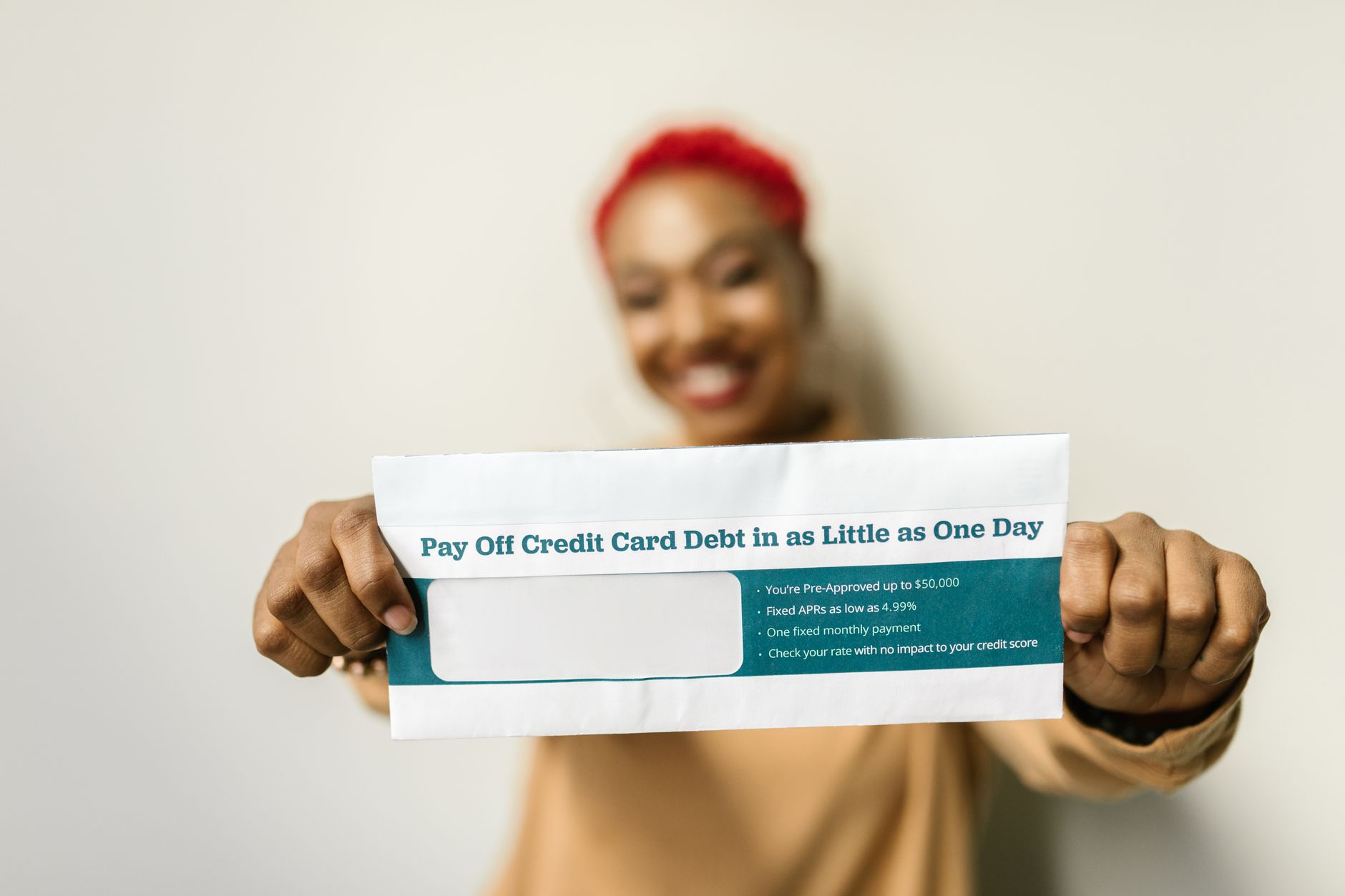
Consolidating multiple high‑interest debts into a single personal loan can simplify payments and lower your overall interest rate if you qualify for a better APR. In 2025, borrowers who consolidated credit card debt averaging 22% APR into a personal loan at 12% APR saved roughly $1,500 per year in interest (Experian, 2025).
List all existing debts, their balances, and interest rates. Then seek a loan large enough to pay them off in one go. Avoid taking out more than you need, as extra funds can lead to new debt.
After consolidation, close the paid‑off accounts or keep them open with zero balances to maintain a low utilization ratio. Continue to make on‑time payments on the new loan to rebuild your credit.
Frequently Asked Questions
Can I get a personal loan with a credit score below 500?
Yes, some lenders specialize in deep subprime loans, but expect APRs above 30% and possible origination fees. In 2025, fewer than 10% of applicants with scores under 500 were approved without collateral (MyFICO, 2025). Consider a secured loan or a co‑signer to improve terms.
How long does it take to receive funds after approval?
Many online lenders disburse funds within one to two business days after signing the loan agreement. Traditional banks may take up to a week, especially if they require in‑person verification.
Will checking my rate affect my credit score?
Prequalification uses a soft inquiry, which does not impact your score. Only a hard inquiry from a formal application can cause a small, temporary dip.
Are there alternatives to a personal loan for bad credit?
Options include credit‑union loans, peer‑to‑peer lending, or a home equity line of credit if you own a home. Each has its own eligibility criteria and cost structure.
How can I rebuild my credit after taking a personal loan?
Make every payment on time, keep credit utilization below 30%, and avoid new hard inquiries. Over 12‑18 months of responsible use, many borrowers see their score increase by 50‑100 points (Experian, 2025).
Conclusion
Getting a personal loan with bad credit is challenging but not impossible. Focus on improving your credit profile, shopping with soft‑pull prequalification, and comparing total costs rather than just monthly payments.
- Check your credit report for errors and dispute them.
- Lower your debt‑to‑income ratio and utilization before applying.
- Use prequalification tools to compare APRs without hurting your score.
Sources
- MyFICO. “Understanding FICO Scores.” https://www.myfico.com/credit-education/credit-scores, retrieved 2026-10-12.
- Experian. “Personal Loan Rates by Credit Score.” https://www.experian.com/blogs/ask-experian/, retrieved 2026-10-12.
- Federal Reserve. “Report on the Economic Well‑Being of U.S. Households.” https://www.federalreserve.gov/publications/report-economic-well-being-us-households.htm, retrieved 2026-10-12.
This article is for educational purposes only and does not constitute financial advice. Investing involves risk, including loss of principal.