Most people leave money in a standard savings account earning 0.45% APY while online banks offer 10 times that rate — yet only 21% of households use a high-yield account, according to the Federal Reserve’s 2023 Survey of Consumer Finances. The gap between what your money could earn and what it actually earns often comes down to confusion between account types. This guide breaks down the real differences between online savings accounts and money market accounts so you can pick the one that matches how you actually use your money.
Key Takeaways
– High-yield online savings accounts averaged 4.5% APY in 2025 versus 4.3% for money market accounts (FDIC, 2025).
– 60% of money market accounts require a $2,500+ balance to waive monthly fees; most high-yield savings accounts charge no monthly fee at all (Bankrate, 2025).
– The national average savings rate sat at 0.45% in 2025 — a fraction of what top online accounts pay (Federal Reserve, 2025).
– Both account types are FDIC-insured up to $250,000 per depositor, per bank (FDIC, 2025).
What Is an Online Savings Account?
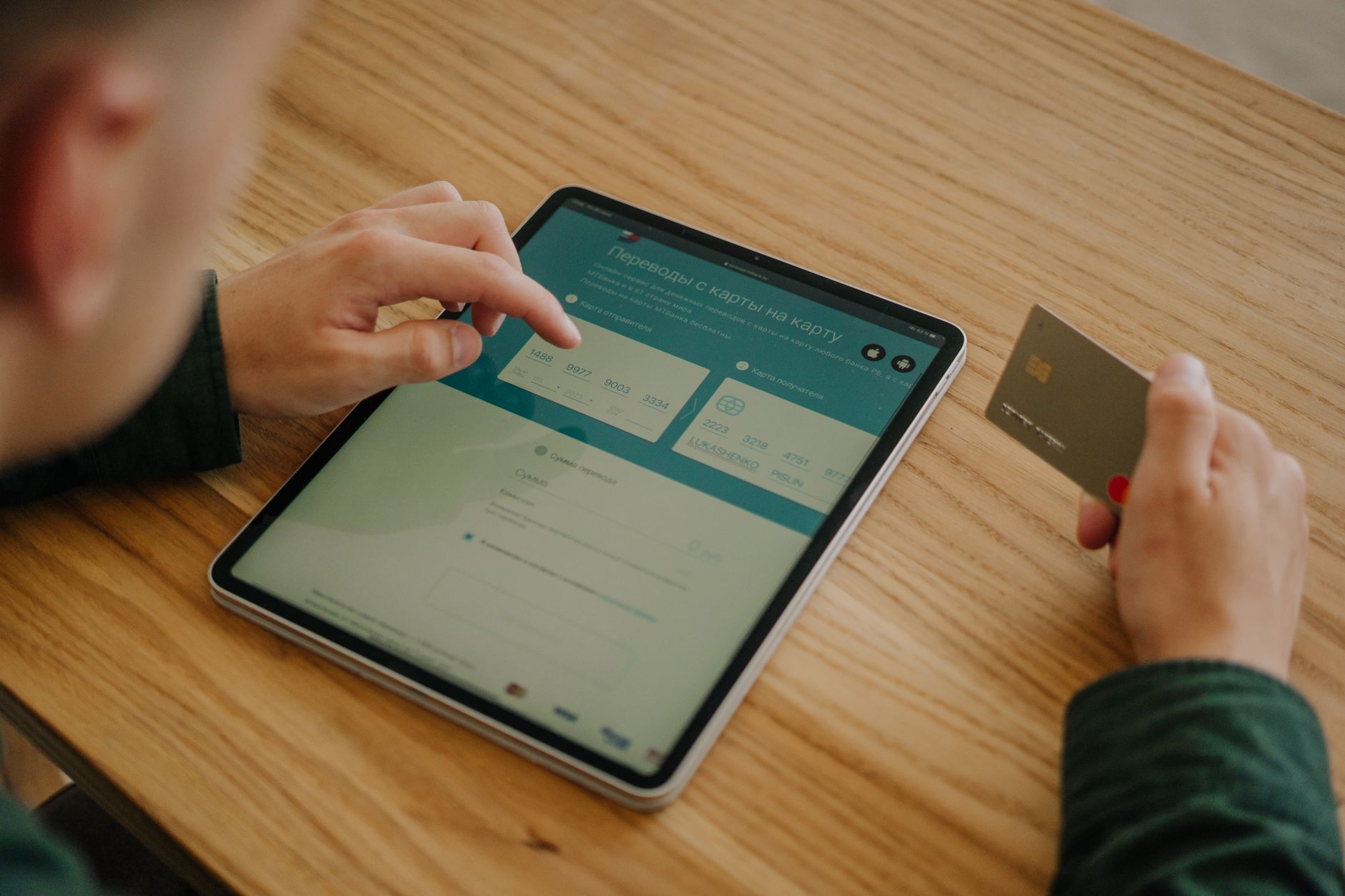
An online savings account is a deposit account offered by internet-only banks or online divisions of traditional banks that pays a significantly higher annual percentage yield than branch-based accounts. In 2025, the best online savings accounts paid 4.5% APY or more with no monthly maintenance fees and no minimum balance requirements. These accounts typically limit you to six convenient withdrawals per statement cycle under Regulation D, though the Fed suspended enforcement in 2020 and many banks now allow more flexibility.
Because online banks don’t maintain physical branches, they pass overhead savings to customers through higher rates. You manage everything through a mobile app or website — deposits via mobile check capture, ACH transfers, or direct deposit. Most online savings accounts don’t offer check writing or debit card access, which keeps the account focused on growing your balance rather than spending it. If you want your emergency fund to earn a competitive return while staying liquid, this is often the simplest choice.
Wondering whether the lack of a local branch matters? For most savers, it doesn’t — ACH transfers to your checking account usually arrive in one to two business days.
What Is a Money Market Account?
A money market account (MMA) blends features of savings and checking: it pays interest comparable to high-yield savings but often includes check writing and a debit card for limited transactions. In 2025, competitive MMAs offered 4.3% APY on average, slightly below the top online savings rates. The trade-off is access — you can write a few checks per month or use a debit card for purchases, which a standard savings account doesn’t allow.
MMAs typically require higher minimum balances to avoid monthly fees. Bankrate’s 2025 survey found that 60% of money market accounts require $2,500 or more to waive a $10–$15 monthly maintenance fee. If your balance dips below that threshold, fees can quickly erase the interest advantage. Some MMAs also tier their rates, paying the highest APY only on balances above $10,000 or $25,000. Read the rate schedule before assuming the advertised yield applies to your whole balance.
Does the check-writing feature justify the higher balance requirement? Only if you’ll actually use it — otherwise you’re paying for access you don’t need.
How Do the Interest Rates Compare?
In 2025, high-yield online savings accounts edged out money market accounts by about 0.2 percentage points on average — 4.5% versus 4.3% APY according to FDIC national rate data. That difference sounds small, but on a $20,000 balance it’s $40 more per year. The national average savings rate across all banks was just 0.45% in 2025, meaning the typical saver at a big brick-and-mortar bank earns roughly one-tenth what an online saver earns.
Rates on both account types move with the federal funds rate. When the Fed raised rates aggressively in 2022–2023, high-yield savings APYs peaked above 5.0% before settling near 4.5% in 2025 as the Fed began cutting. Money market rates followed a similar path but tend to lag slightly because banks price them more conservatively. If rates fall further in 2026, the spread between the two may narrow or flip.
Have you checked your current APY lately? Many people stay at 0.01% out of inertia.
What About Fees and Minimum Balances?
Fees are where the two accounts diverge most. Most top online savings accounts charge zero monthly fees and have no minimum balance — you can open one with $1 and keep it at $1. Money market accounts are different: Bankrate’s 2025 data shows 60% require a $2,500+ average daily balance to waive a $10–$15 monthly fee. Fall below that, and a $15 fee wipes out roughly $375 in interest at 4% APY.
Some MMAs also charge excessive withdrawal fees beyond the six-transaction limit, typically $10–$15 per transaction. Online savings accounts may charge similar fees but often just convert the account to checking or close it after repeated violations. If you maintain a high balance and value check access, an MMA’s fee structure may not bother you. If your balance fluctuates — say you’re saving for a down payment and pulling chunks out — a no-fee online savings account is safer.
Let’s run the numbers: if you keep $5,000 in a money market account at 4.3% APY but dip to $2,000 for three months and incur a $15 monthly fee, you lose $45 in fees versus earning about $15 in interest during those months — a net loss of $30. The same $5,000 in a no-fee 4.5% online savings account would earn roughly $185 over the full year with no risk of fees.
How Easy Is It to Access Your Money?
Online savings accounts prioritize electronic transfers. You link an external checking account and move money via ACH — usually one to two business days. Some offer same-day transfers for a fee or instant transfers to partner accounts. You generally can’t write checks, use a debit card, or withdraw cash at an ATM directly from the savings account.
Money market accounts give you more ways to touch your funds: a debit card for purchases or ATM withdrawals, and often a checkbook with a limited number of checks per month. This can be handy if you occasionally need to pay a contractor or make a large purchase directly from savings. But remember — Regulation D still applies to “convenient” withdrawals, and many banks count debit card purchases and checks toward that limit.
If you rarely touch your savings, the extra access of an MMA is theoretical. If you treat savings as a quasi-checking account, the MMA’s tools may save you transfer hassles.
Are Both Accounts FDIC-Insured?
Yes. Both online savings accounts and money market accounts at FDIC-member banks are insured up to $250,000 per depositor, per ownership category, per institution. The FDIC’s 2025 deposit insurance rules treat them identically — they’re both deposit accounts, not investment products. Money market mutual funds (offered by brokerages) are not FDIC-insured; don’t confuse them with money market deposit accounts at banks.
If you have more than $250,000, you can increase coverage by using different ownership categories (individual, joint, trust) or spreading funds across multiple banks. The FDIC’s Electronic Deposit Insurance Estimator (EDIE) at fdic.gov lets you calculate your exact coverage. This protection is a core reason to keep emergency savings in a bank account rather than a higher-yielding but uninsured alternative.
Which Account Fits Your Savings Goals?
Choose an online savings account if: you want the highest APY with zero fees, you don’t need check writing or a debit card, your balance fluctuates, or you’re building an emergency fund you rarely touch. The 4.5% APY (2025 average) compounds faster with no drag from fees.
Choose a money market account if: you maintain at least $2,500–$10,000 consistently, you value writing an occasional check or using a debit card directly from savings, and the specific MMA you’re considering pays a rate within 0.1–0.2% of the best online savings account. Some people use an MMA as a “hub” account — parking cash there before moving it to investments or paying large bills.
You can also have both. Many savers keep their core emergency fund in a high-yield online savings account and use a money market account for a specific goal like a home down payment where they want check access for earnest money deposits.
Here’s a practical framework: if you’d use the check/debit feature fewer than three times a year, the MMA’s higher balance requirement and slightly lower rate probably aren’t worth it. Three check uses per year saves you maybe three ACH transfers — not worth risking a $15 monthly fee if your balance drops.
How to Open Either Account in Minutes
Opening an online savings account takes about five minutes: choose a bank, provide your Social Security number, address, and date of birth, and fund it via ACH from an existing account. Most online banks use soft credit pulls that don’t affect your score. Money market accounts follow the same process but may ask for a higher initial deposit — often $100 to $2,500 depending on the bank.
Before applying, compare the current APY, fee schedule, minimum balance, withdrawal limits, and mobile app ratings. Bankrate and NerdWallet publish updated comparison tables monthly. Once funded, set up automatic transfers from checking on payday — this “pay yourself first” habit builds balances faster than manual transfers. If you’re also investing, consider directing some savings toward a tax-advantaged account; our guide on how to start investing with $100 covers micro-investing apps that complement your savings strategy.
One final tip: schedule a calendar reminder to check your APY every six months. Banks change rates without fanfare, and a 0.5% drop on $20,000 costs you $100 a year.
Frequently Asked Questions
Can I lose money in a money market account?
No, not from market fluctuations. Money market deposit accounts at FDIC-insured banks are protected up to $250,000. Only money market mutual funds can lose principal.
How many withdrawals can I make from an online savings account?
Regulation D historically limited convenient withdrawals to six per month. The Fed suspended enforcement in 2020; many banks now allow more, but some still enforce the limit or charge fees beyond it. Check your bank’s policy.
Do money market accounts have better rates for large balances?
Some do — tiered rate structures may pay 4.5%+ on balances above $25,000. But many top online savings accounts pay the same high rate on all balances with no tiers.
Is my money stuck in a CD if I choose a money market account?
No. Money market accounts are liquid deposit accounts, not certificates of deposit. You can withdraw anytime, subject to the bank’s transaction limits.
Which account is better for an emergency fund?
Online savings accounts typically win for emergency funds: higher APY, no fees, no minimums, and the slight friction of ACH transfers discourages non-emergency spending.
Bottom Line: Pick the Account You’ll Actually Use
- Online savings accounts offer the highest rates with the fewest strings attached — ideal for set-it-and-forget-it growth.
- Money market accounts add check and debit access but often require $2,500+ to avoid fees that can erase your interest earnings.
- Both are FDIC-insured, both move with Fed rate changes, and you can hold both for different purposes.
Sources
- FDIC. “National Rates and Rate Caps.” Retrieved 2026-10-15. https://www.fdic.gov/resources/bankers/national-rates/
- FDIC. “Deposit Insurance.” Retrieved 2026-10-15. https://www.fdic.gov/deposit-insurance
- Federal Reserve. “Selected Interest Rates (Daily) – H.15.” Retrieved 2026-10-15. https://www.federalreserve.gov/releases/h15/
- Federal Reserve. “Report on the Economic Well-Being of U.S. Households in 2023.” Retrieved 2026-10-15. https://www.federalreserve.gov/publications/report-economic-well-being-us-households.htm
- Bankrate. “Best Savings Account Rates.” Retrieved 2026-10-15. https://www.bankrate.com/banking/savings/rates/
This article is for educational purposes only and does not constitute financial advice. Investing involves risk, including loss of principal.