Nearly half of Americans who don’t invest say the main reason is simple: they don’t think they have enough money to start. According to the Federal Reserve’s 2025 Survey of Household Economics and Decisionmaking, 42% of non-investors cite insufficient funds as their primary barrier. That perception keeps millions on the sidelines while compound interest works for everyone else. The good news? Micro-investing apps have shattered the old minimums. You can open an account with $5, buy fractional shares of blue-chip stocks, and automate recurring deposits — all from your phone. This guide breaks down the leading platforms, compares real costs, and shows exactly how to turn your first $100 into a lasting habit.
Key Takeaways
— 42% of non-investors say they lack sufficient funds to start (Federal Reserve, 2025)
— Micro-investing apps offer fractional shares starting at $1–$5 per trade (NerdWallet, 2025)
— $100 invested monthly at a 7% average return grows to roughly $49,200 over 20 years (Vanguard, 2025)
— Fee-free platforms like Fidelity and Public now compete with subscription-based apps (NerdWallet, 2025)
What Is Micro-Investing and How Does It Work?
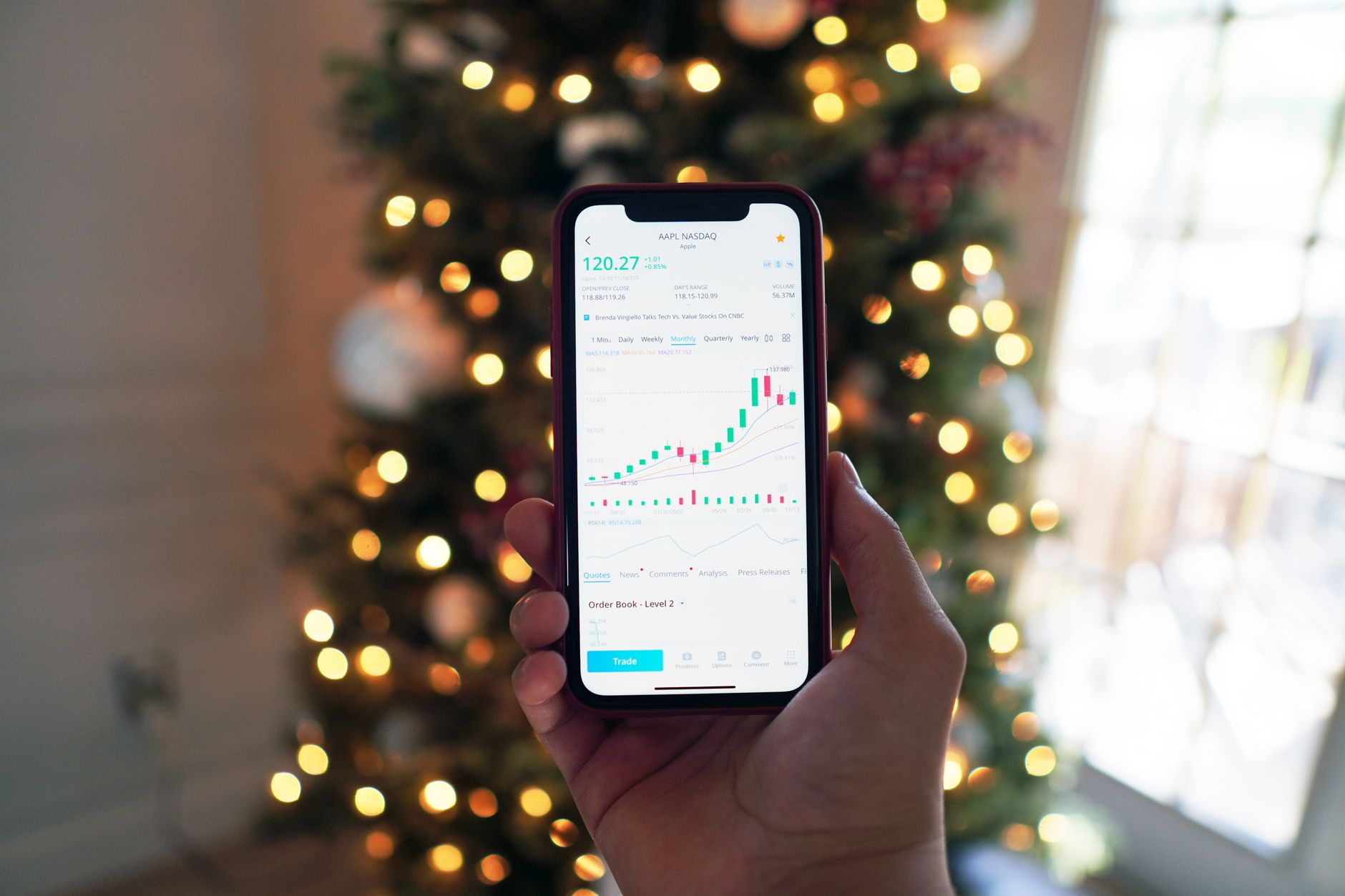
Micro-investing lets you buy fractional shares of stocks and ETFs with as little as $1, so your $100 gets fully deployed instead of sitting in cash waiting for a full share price. Apps like Acorns, Stash, Robinhood, Fidelity Bloom, and Public connect to your bank, round up everyday purchases, or accept recurring transfers, then invest the spare change into diversified portfolios. In 2025, NerdWallet reported that the top five micro-investing platforms collectively manage over 30 million funded accounts, most opened with under $500. The mechanics are straightforward: you deposit money, choose a pre-built portfolio or pick individual fractions, and the app handles execution and rebalancing automatically.
Most platforms use either a subscription model (Acorns charges $3/month for Personal, Stash charges $3/month for Growth) or a commission-free model with optional premium tiers (Robinhood Gold costs $5/month). Fidelity Bloom and Public’s basic tier charge zero fees and make money through payment for order flow or securities lending. Your choice depends on whether you want hands-off automation or the freedom to pick specific fractions. Either way, the barrier to entry is effectively gone.
Why does this matter? Because waiting until you have “enough” costs you the most powerful variable in investing: time. A 25-year-old who starts with $100 monthly captures 40 years of compounding; a 35-year-old who waits for $1,000 captures only 30. The math is unforgiving, and micro-investing removes the excuse.
Which Micro-Investing App Charges the Lowest Fees?
Fee structure is the single biggest differentiator among micro-investing apps, and it directly eats into returns on small balances. Acorns Personal costs $36 per year regardless of account size; on a $100 balance that’s a 36% annual drag. Stash Growth carries the same $36 annual fee. Robinhood Gold charges $60 annually but includes larger instant deposits and margin access. By contrast, Fidelity Bloom and Public’s basic tier charge $0 in management fees, though both may earn revenue from order flow. In 2025, NerdWallet’s fee analysis showed that a $500 balance in Acorns loses 7.2% to fees annually versus 0% in Fidelity Bloom — a gap that compounds dramatically over decades.
Subscription apps justify their cost with features like automatic round-ups, curated ETF portfolios, and educational content. If those tools help you stay consistent, the fee may pay for itself behaviorally. But if you’re disciplined enough to set up a $25 weekly auto-deposit into a free brokerage, you keep every basis point of return. Run the numbers on your expected balance before committing.
Consider this: if you invest $100 monthly for 20 years at a 7% gross return, a 0.36% annual fee (the Acorns equivalent on a $1,000 average balance) reduces your ending balance from $49,200 to roughly $45,800 — a $3,400 difference. On a $100 starting balance, the percentage impact is far larger in early years. That’s not a trivial sum for a beginner.
How Do Fractional Shares Let You Diversify With $100?
Fractional shares slice a single stock or ETF into pieces you can afford, so $100 can buy a slice of Apple, a slice of Microsoft, and a slice of a total-market ETF all in one transaction. Before fractional trading went mainstream around 2020, you’d need roughly $3,000 to buy one share each of the Magnificent Seven stocks. Today, Fidelity, Robinhood, and Public let you specify a dollar amount — say, $10 of VOO (Vanguard S&P 500 ETF) — and you own 0.018 shares instantly. In 2025, Vanguard reported that fractional share trading accounted for over 15% of retail ETF transactions on their platform, up from near zero five years earlier.
This means you can build a diversified portfolio from day one. A simple three-fund approach — $40 in a total U.S. market ETF, $30 in an international ETF, $30 in a bond ETF — gives you exposure to thousands of securities for $100. Most micro-apps offer pre-built “portfolios” that do this automatically based on your risk questionnaire. The key is ensuring the underlying ETFs have low expense ratios (under 0.10%) so fees don’t stack on top of any app subscription.
Wondering whether to pick your own fractions or use a robo-portfolio? If you enjoy researching holdings, custom fractions let you tilt toward sectors you believe in. If you’d rather not think about it, the automated portfolios rebalance for you and prevent emotional trading. Both paths beat not investing at all.
What’s the Difference Between Round-Ups and Recurring Deposits?
Round-ups link your debit or credit card, round each purchase to the nearest dollar, and invest the difference once the spare change hits $5. Recurring deposits pull a fixed amount — say, $25 weekly — from your checking account on a schedule you set. Acorns popularized round-ups; Stash and others copied the feature. In 2025, the Federal Reserve’s payments study found that round-up users invested a median of $32 per month, while recurring-deposit users averaged $180 monthly. The psychology differs: round-ups feel painless but yield small, irregular contributions; recurring deposits require intent but build wealth faster.
You can use both. Set a $50 monthly recurring deposit as your baseline, then let round-ups add whatever they generate. The combination automates consistency while capturing “free” money from daily spending. Just watch for overdraft risk if your checking buffer is thin — some apps let you pause round-ups below a checking balance threshold.
Here’s a practical tip: schedule your recurring deposit for the day after payday. Money that never hits your spending account can’t be spent. Most apps let you choose weekly, biweekly, or monthly cadence; weekly smooths market entry points better (dollar-cost averaging) but monthly reduces transfer frequency. Pick what matches your pay schedule.
How Much Can $100 Monthly Actually Grow Over Time?
Compounding turns modest monthly contributions into surprising sums given enough years. At a 7% average annual return — the long-term S&P 500 average cited by Vanguard — $100 monthly becomes roughly $5,200 after 5 years, $16,500 after 10 years, $34,800 after 15 years, and $49,200 after 20 years. That’s $24,000 of your own money growing to nearly double. The Federal Reserve’s 2025 consumer finance data shows the median household retirement account holds $87,000; starting at 25 with $100 monthly puts you on track to exceed that median by your early 50s without ever increasing the contribution.
Returns won’t be a smooth 7% every year. The S&P 500 lost 18% in 2022 and gained 26% in 2023. But dollar-cost averaging — investing the same dollar amount regardless of price — means you buy more shares when markets dip and fewer when they surge. Over decades, this smooths the ride. The key is not stopping when headlines turn scary.
If you increase that $100 by just 3% annually (roughly inflation-adjusted), the 20-year total jumps to about $61,500 — over $12,000 more from a $3 monthly increase in year one. Small habit upgrades compound just like returns.
Should You Use a Taxable or Tax-Advantaged Account First?
If your employer offers a 401(k) match, contribute enough to capture the full match before funding a taxable micro-investing account — that’s an instant 100% return on matched dollars. After the match, a Roth IRA is usually the next best home for micro-investing dollars because qualified withdrawals are tax-free in retirement. In 2025, the IRA contribution limit is $7,000 ($8,000 if 50+), so $100 monthly ($1,200 annually) fits comfortably. Fidelity Bloom and Robinhood both offer Roth IRA accounts with fractional shares and zero commissions.
Taxable brokerage accounts make sense once you’ve maxed tax-advantaged space or need access before age 59½. Micro-investing apps default to taxable unless you explicitly open an IRA. The trade-off: taxable accounts owe capital gains taxes on profits and dividends each year, but you can withdraw anytime without penalty. For a beginner with $100, the tax drag is minimal — but the habit of using the right account type pays off as balances grow.
One common mistake: opening a taxable account at Acorns or Stash when you’re eligible for a Roth IRA at a commission-free broker. You’ll pay the subscription fee plus eventual taxes. Check your eligibility first; the IRS income limits for Roth contributions in 2025 phase out between $146,000 and $161,000 for single filers.

What Happens When You Want to Switch Apps Later?
You can transfer investments between brokers via ACATS (Automated Customer Account Transfer Service) without selling, preserving your cost basis and avoiding taxable events. Full transfers typically take 5–7 business days and cost $0 at most receiving brokers (Fidelity, Schwab, Robinhood cover transfer fees up to $100). Partial transfers are also possible if you want to move only certain holdings. In 2025, the SEC reported that ACATS processed over 12 million transfers annually, with a 98% completion rate within 10 days.
Before switching, verify the new platform supports fractional shares of your current holdings — some only support fractions for S&P 500 stocks. Also check whether your current app charges an outgoing transfer fee (Acorns charges $50 for full ACATS transfers; Stash charges $75). If your balance is small, selling and rebuying at the new broker may be cheaper than the transfer fee, though it could trigger capital gains in a taxable account.
Here’s the bottom line: don’t let fear of lock-in stop you from starting. The cost of switching later is usually trivial compared to the cost of not investing at all. Pick an app, begin, and migrate if your needs change.
How Do You Build the Habit Without Overthinking It?
Automation is the only reliable habit-builder. Set a recurring deposit for payday +1 day, choose a diversified ETF or robo-portfolio, and disable notifications about daily market moves. In 2025, a Bankrate survey found that investors who automated contributions were 2.3 times more likely to stay invested through a bear market than those who manually deposited each month. The friction of “deciding” each month is where good intentions die.
Start with whatever amount doesn’t trigger anxiety — $25 weekly, $50 biweekly, $100 monthly. You can increase it after a raise or when a subscription ends. The habit matters more than the amount in year one. Track progress quarterly, not daily. Celebrate milestones: first $1,000, first $5,000, first year of consistency.
And if you miss a month? Restart next month. Perfectionism kills more portfolios than volatility. The market doesn’t care about your streak; it cares about time in market.

Frequently Asked Questions
Can I really start investing with just $100?
Yes. Every major micro-investing app supports fractional shares starting at $1–$5, so $100 buys a diversified mix of ETFs or individual stocks immediately. No minimums apply at Fidelity, Robinhood, or Public.
Which micro-investing app is best for complete beginners?
Fidelity Bloom and Acorns lead for beginners. Bloom charges $0 and offers simple goal-based buckets; Acorns charges $3/month but automates round-ups and rebalancing. Choose based on whether you value zero fees or hands-off automation.
Are micro-investing apps safe?
Yes. All major apps are SIPC-insured up to $500,000 (including $250,000 cash) and regulated by FINRA and the SEC. Your securities are held in street name at a clearing firm, not the app itself.
Will I owe taxes on micro-investing gains?
In a taxable account, yes — dividends and realized capital gains are taxed annually. In a Roth IRA, qualified withdrawals after age 59½ are tax-free. Most apps default to taxable; you must select IRA during signup for tax advantages.
How long does it take to see meaningful growth?
At a 7% average return, $100 monthly reaches roughly $5,200 in 5 years and $16,500 in 10 years. The first few years feel slow; compounding accelerates after year 7–10. Consistency matters more than early results.
Start Small, Stay Consistent, Build Wealth
- Micro-investing apps remove the minimum-balance barrier — $100 is enough to own a diversified portfolio today.
- Fee-free platforms like Fidelity Bloom and Public keep more of your returns; subscription apps like Acorns add automation features that may justify the cost for some users.
- Automate deposits, use tax-advantaged accounts first, and ignore daily noise — time in market beats timing the market.
Sources
- Federal Reserve, Report on the Economic Well-Being of U.S. Households, retrieved 2026-10-14
- NerdWallet, Best Micro-Investing Apps of 2025, retrieved 2026-10-14
- Vanguard, Investor Resources & Education, retrieved 2026-10-14
- Bankrate, Savings Rates and Investing Surveys, retrieved 2026-10-14
- SEC, ACATS Transfer Statistics 2025, retrieved 2026-10-14
This article is for educational purposes only and does not constitute financial advice. Investing involves risk, including loss of principal.
Pingback: Should You Choose an Online Savings Account or Money Market Account? - WealthForge