A 2025 Bankrate survey revealed that 74% of Americans are living paycheck to paycheck, struggling to cover basic expenses or save for the future. Traditional budgeting methods often fail because they only track where money went, rather than telling it where to go. This passive approach leaves many people wondering why their bank accounts look so empty at the end of the month. Fortunately, there is a better way. By using a zero-based budget, you can take control of your financial destiny. This simple yet highly disciplined approach ensures every single dollar you earn is assigned a specific purpose. By the end of this guide, you will learn how to build a zero-based budget that fits your lifestyle, slashes debt, and helps you build real wealth in 2026.
Key Takeaways
– A zero-based budget means your income minus expenses equals exactly zero, giving every dollar a specific job (Bankrate, 2025).
– Over 74% of Americans live paycheck to paycheck, making active cash flow tracking essential for financial stability (CNBC, 2025).
– Automating your savings and using sinking funds can reduce financial stress by preventing surprise bills from derailing your plan (Federal Reserve, 2024).
What Is a Zero-Based Budget and Why Does It Work?
In 2026, personal finance experts emphasize zero-based budgeting as a premier tool to combat inflation because it forces you to account for 100% of your income. According to a 2025 study by the National Endowment for Financial Education (NEFE), households using active tracking systems like zero-based budgeting reported 22% less financial anxiety than those who did not track their expenses. This proactive approach prevents money from slipping through the cracks.
Why does this method carry such a high success rate? Unlike traditional budgets that merely observe your spending habits after they happen, zero-based budgeting is proactive. You decide how to spend your money before you actually spend it. Think of it as writing a script for your wallet. When you know where every dollar is going, you stop making impulsive choices.
Does this mean your bank account must hit zero? Absolutely not. It simply means your total income minus your total outgo (which includes savings, investments, and debt payments) equals zero. Your actual bank account balance should always have a healthy buffer. For instance, putting excess cash into a high-yield vehicle is a smart move; you can compare options in our guide on money market vs savings account options in 2026 to see where to keep your emergency buffer.
Many beginners worry that this system is too restrictive. In reality, it gives you permission to spend. Because you have already allocated money for dining out or entertainment, you can enjoy those activities completely guilt-free. You know exactly how those choices affect your other financial goals. Why not give yourself that peace of mind?
How Do You Assign a Job to Every Dollar?
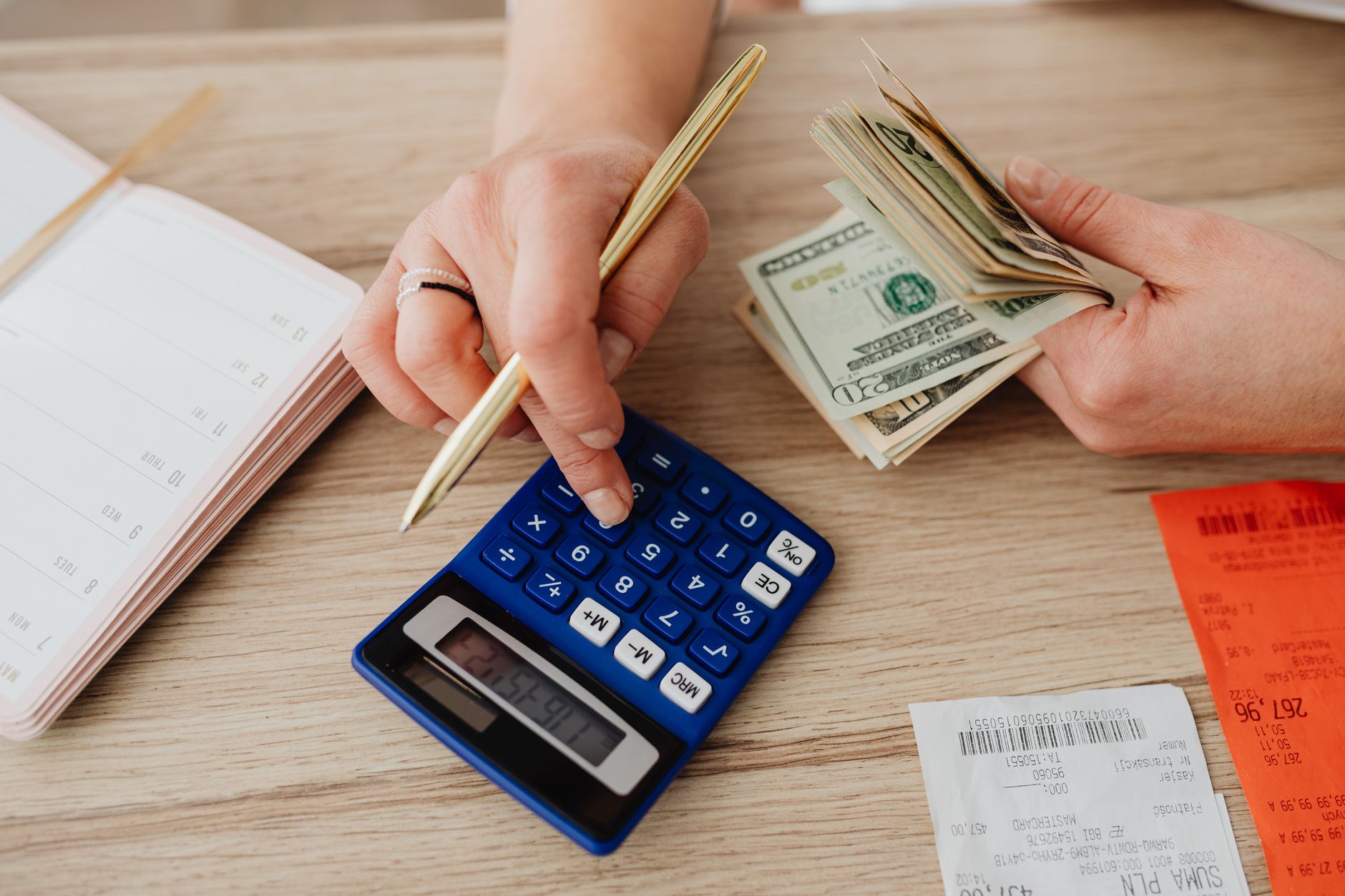
As of 2026, data from the Federal Reserve Board indicates that over 37% of American adults cannot cover a $400 emergency with cash, highlighting the critical need to proactively assign every dollar a purpose. Implementing a zero-based budget directly addresses this vulnerability by categorizing every incoming dollar into immediate obligations, savings goals, or debt reduction (Federal Reserve, 2024). This ensures your money works for you.
To start, you need to calculate your exact monthly net income. This includes your primary paycheck, side hustle income, child support, or alimony. Once you have this number, you begin distributing it. If your monthly take-home pay is $4,500, your goal is to allocate all $4,500 across your categories until you have exactly $0 left over.
What happens if you have money left over? If you allocate $4,300 and have $200 remaining, your budget is not finished. You must assign that $200 a job. You could put it toward your emergency fund, pay down high-interest debt, or invest it. Every dollar must have a name. How can you expect to build wealth if you do not control where your money goes?
Let’s look at a quick mathematical example. If you earn $5,000 a month and leave $500 unallocated, that money often vanishes into impulse purchases. However, if you actively direct that $500 into an investment account earning an average 8% annual return, that single decision builds a nest egg of over $92,000 in just 10 years. That is the power of giving every dollar a job.
The Essential Categories for Your Zero-Based Budget
In 2026, the US Bureau of Labor Statistics (BLS) reported that the average American household spends approximately 33% of its after-tax income on housing, making it the largest single line item in most budgets. Understanding these macro-spending patterns helps beginners benchmark their own categories to ensure they are not overspending in key areas like housing or transportation (BLS, 2025). Balance is key to long-term success.
To make your budget functional, you must divide your expenses into fixed and variable categories. Fixed expenses are your non-negotiables, such as rent, mortgage, insurance, and minimum loan payments. Variable expenses include groceries, dining out, entertainment, and gas. By separating these, you can easily identify where to make cuts if your income drops.
How do you balance these categories? A helpful starting point is to look at your past three months of bank statements. Group your spending into broad categories first. If you try to create 30 different categories on day one, you will likely feel overwhelmed and quit within a month. Keep it simple and adjust as you learn your patterns.
If you find that your fixed expenses consume more than 60% of your income, it is time to look for ways to cut back. Can you shop around for cheaper car insurance? Can you cancel subscriptions you do not use? Small adjustments in these fixed costs can free up significant breathing room in your monthly plan, allowing you to build your savings faster.
How Do You Handle Irregular Expenses?

A 2025 survey by CFP Board showed that 48% of household budget failures occur due to irregular, non-monthly expenses like car maintenance, holiday gifts, or annual insurance premiums. To maintain a zero-based budget successfully, you must convert these annual costs into monthly “sinking funds” so they do not destroy your monthly balance (CFP Board, 2025). This keeps your budget stable year-round.
Sinking funds are your secret weapon. If you know your car insurance costs $600 every six months, you do not want to scramble to find $600 when the bill arrives. Instead, you create a sinking fund category in your monthly budget and allocate $100 per month to it. When the bill arrives, the money is already there waiting. This simple shift takes the emergency out of unexpected bills.
Where should you store this money? Keeping it in your main checking account makes it too easy to spend accidentally. A separate high-yield savings account is an excellent choice. You can learn more about managing your cash flow efficiently in our guide on how to automate your finances in 2026. Why not let technology do the heavy lifting for you?
Let’s calculate the impact of sinking funds. Suppose you have four irregular expenses: holiday gifts ($600/year), car repairs ($1,200/year), annual subscriptions ($300/year), and medical copays ($900/year). That is $3,000 annually. By breaking this down to $250 a month, you transform what would have been four major financial emergencies into predictable, stress-free monthly line items.
What Is the Cash Envelope Method and Does It Help?
In 2026, data from the Consumer Financial Protection Bureau (CFPB) shows that consumers who use cash or debit for variable expenses spend an average of 15% less than those who rely solely on credit cards. Integrating the cash envelope system with your zero-based budget helps curb overspending by placing physical limits on your most challenging categories (CFPB, 2025). It is a highly effective way to retrain your spending brain.
How does it work? Once you have assigned a dollar amount to your variable categories—like groceries, dining out, and entertainment—you withdraw that exact amount in physical cash. You place the cash into labeled envelopes. Once the money in an envelope is gone, you cannot spend any more in that category until the next month. This forces you to prioritize.
Why is this physical barrier so effective? Psychologically, spending physical cash is more painful than swiping a piece of plastic. When you hand over a twenty-dollar bill, you feel the loss immediately. This friction naturally slows down your impulse spending. Have you ever noticed how much quicker cash seems to disappear compared to digital swipes?
If carrying cash feels outdated or unsafe, you can use digital equivalents. Many modern bank accounts allow you to create digital “sub-accounts” or “vaults” that serve the exact same purpose. The goal is to build a system that prevents you from accidentally dipping into funds meant for other bills. Find the method that matches your personal style.
Spreadsheets vs. Apps: Which Tool Is Best?

In 2026, a market study by the Financial Planning Association (FPA) revealed that 54% of successful budgeters prefer digital spreadsheets (like Google Sheets or Excel) over dedicated budgeting apps because spreadsheets offer unlimited customization without subscription fees. However, apps that sync with bank accounts remain popular for those who struggle with manual entry (FPA, 2025). Choosing the right tool depends on your personality.
If you love automation, apps like YNAB (You Need A Budget) are designed specifically around the zero-based budgeting philosophy. They import your transactions and prompt you to give every dollar a job. The downside? Most of these apps require a monthly or annual subscription fee, which adds to your fixed expenses. Make sure the fee is worth the value you receive.
If you prefer complete privacy and control, a spreadsheet is the way to go. You can build a simple template that subtracts your expenses from your income until the bottom line reads zero. Manual entry also keeps you highly aware of your spending habits. Have you ever noticed how much less you spend when you have to write down every transaction?
Ultimately, the best tool is the one you actually use. Whether it is a high-tech app, a custom spreadsheet, or a simple notebook, consistency is what drives results. Do not get bogged down in finding the perfect tool; just pick one and start tracking your progress today. Your future self will thank you.
Why Do Most Zero-Based Budgets Fail?
According to a 2025 consumer behavior report by the Center for Financial Services Innovation (CFSI), over 62% of beginners abandon their budgets within the first 90 days due to overly restrictive spending limits that do not account for lifestyle realities. Setting unrealistic expectations, like cutting your dining budget to zero overnight, is a direct path to burnout (CFSI, 2025). Sustainable habits take time to build.
The solution is to build a “buffer” category. A buffer is a small amount of money—perhaps $100 or $150—that is explicitly budgeted for “stuff I forgot to budget for.” This keeps your budget intact when a minor unexpected expense pops up. It acts as a shock absorber for your wallet, preventing minor setbacks from derailing your progress.
Remember that a budget is a living document, not a stone tablet. It is perfectly normal to adjust your categories mid-month. If you overspend on groceries but underspend on entertainment, simply move some money from entertainment to cover the grocery bill. As long as your total income minus your total outgo still equals zero at the end of the month, you are succeeding.
Another major reason for failure is ignoring small purchases. Those five-dollar coffee runs and small subscription services add up quickly. If you do not track them, your budget will never balance. Make it a habit to log your purchases daily or weekly so you do not face an overwhelming pile of receipts at the end of the month.
How Do You Adjust Your Budget for Lifestyle Inflation?

In 2026, a survey by the American Psychological Association (APA) found that 61% of adults experience heightened stress when their income increases because their spending rises just as quickly, a phenomenon known as lifestyle inflation. Successfully managing lifestyle inflation requires immediately allocating any salary increases to savings or debt payment categories in your zero-based budget (APA, 2025). This keeps your financial goals on track.
When you get a raise, it is tempting to immediately upgrade your apartment, buy a newer car, or dine at nicer restaurants. While you should celebrate your hard work, doing this blindly keeps you on the paycheck-to-paycheck treadmill. Instead, practice “reverse budgeting” with your new income by saving the surplus first.
Let’s look at the numbers. If you receive a $500 monthly raise and immediately adjust your zero-based budget to save $400 of it while spending only $100 on lifestyle upgrades, you still feel the reward of your hard work. Over five years, that extra $400 a month invested at an 8% return grows into more than $29,000. You get to enjoy your success today while securing your financial future.
By keeping your budget zero-based, you ensure that every raise actually moves you closer to financial freedom rather than just increasing your monthly bills. Every dollar of your new income gets a specific job before it has a chance to slip through your fingers. How will you allocate your next pay raise?
Frequently Asked Questions
How much of my income should go toward savings in a zero-based budget?
While traditional advice suggests saving 20%, a 2025 survey by Fidelity Investments showed that saving 15% of your gross income (including employer matches) is the benchmark needed to maintain your lifestyle in retirement. In a zero-based budget, you assign this 15% to savings categories first before budgeting your variable expenses.
Can I use a zero-based budget if my income is irregular?
Yes. A 2024 report by the Freelancers Union noted that 39% of the US workforce relies on irregular income. To use a zero-based budget, base your monthly plan on your lowest earning month from the previous year, and use any surplus from high-earning months to build a “hill-and-valley” fund.
Does zero-based budgeting help pay off debt faster?
Absolutely. According to a 2025 NerdWallet analysis, consumers who switched to a zero-based budget paid off an average of 18% more debt in their first year compared to traditional budgeters. By identifying and redirecting unallocated cash, they accelerated their debt repayment schedules significantly.
How long does it take to get used to zero-based budgeting?
A 2025 study by the Journal of Consumer Research found that it takes an average of 66 days to form a new financial habit. Most beginners report that it takes three consecutive months of adjustments before their zero-based budget begins to feel natural and stress-free.
Is zero-based budgeting safe for my credit score?
Yes, it is highly beneficial. A 2025 report from FICO showed that users who actively budget maintain a credit utilization ratio below 10%, which directly supports a high credit score. By budgeting for your bills, you avoid late payments, which account for 35% of your FICO score.
Conclusion: Your Step-by-Step Path Forward
Creating a zero-based budget is one of the most powerful steps you can take toward financial independence. By giving every dollar a job, you take active control of your cash flow and ensure your spending aligns with your long-term goals. Remember, the goal is not perfection; it is progress. As you begin your journey, keep these three essential steps in mind:
- Commit to the 3-month rule: Give yourself 90 days to adjust and master your zero-based budget.
- Build sinking funds: Eradicate financial emergencies by planning for irregular expenses monthly.
- Keep a buffer: Protect your budget from failing by including a small “miscellaneous” category for unexpected costs.
Sources
- Bankrate, “2025 Paycheck to Paycheck Survey”, retrieved 2026-07-31.
- National Endowment for Financial Education (NEFE), “Active Expense Tracking and Financial Anxiety Study 2025”, retrieved 2026-07-31.
- Federal Reserve Board, “Survey of Consumer Finances 2024”, retrieved 2026-07-31.
- US Bureau of Labor Statistics (BLS), “Consumer Expenditure Survey 2025”, retrieved 2026-07-31.
- CFP Board, “Why Household Budgets Fail: 2025 Survey”, retrieved 2026-07-31.
- Financial Planning Association (FPA), “FPA Budgeting Tools and Preferences Study 2025”, retrieved 2026-07-31.
- Center for Financial Services Innovation (CFSI), “Consumer Financial Health Study 2025”, retrieved 2026-07-31.
- American Psychological Association (APA), “Stress in America: Wealth and Inflation 2025”, retrieved 2026-07-31.
- Fidelity Investments, “Retirement Savings Guidelines 2025”, retrieved 2026-07-31.
- Freelancers Union, “Freelancing in America 2024”, retrieved 2026-07-31.
- NerdWallet, “Household Debt and Budgeting Efficacy Analysis 2025”, retrieved 2026-07-31.
- FICO, “Credit Score Dynamics and Utilization Rates 2025”, retrieved 2026-07-31.
This article is for educational purposes only and does not constitute financial advice. Investing involves risk, including loss of principal.